
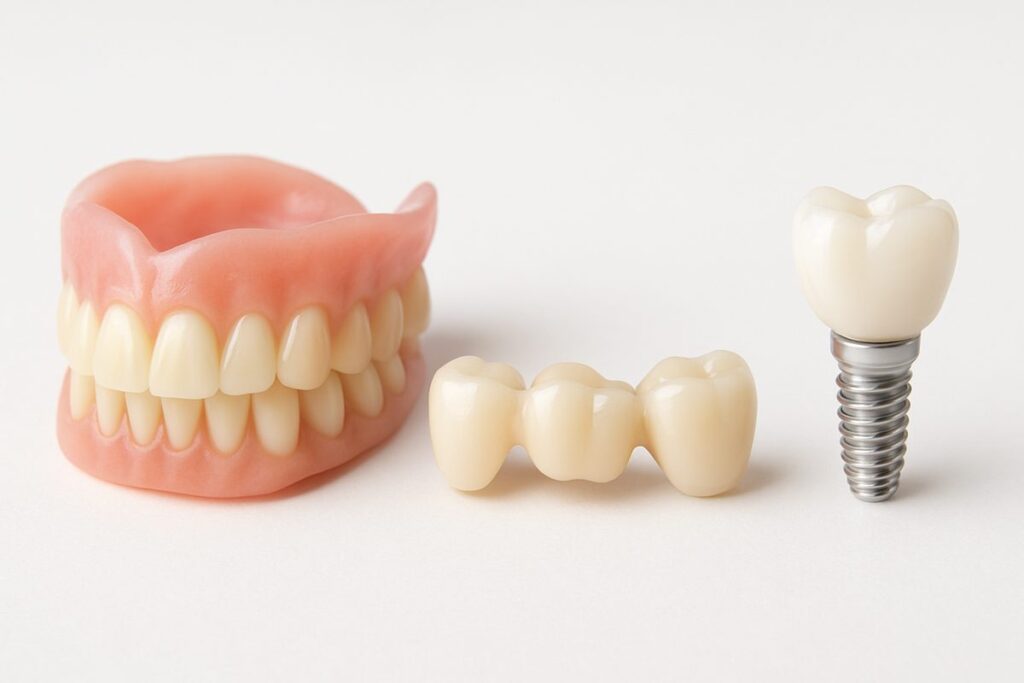
A “fake tooth” can mean several different dental restorations. If you’ve searched “what is a fake tooth called,” common answers include dentures, crowns (caps), bridges, resin restorations, and dental implants. Each option replaces or covers missing or damaged tooth structure in different ways. This article explains those names, how they feel and work, how to pick the best one for you, basic implant types, a typical treatment timeline, quick patient FAQs, and where to get local help answering “what is a fake tooth called.”
Common names: What is a fake tooth called?
Below are quick definitions and when each term is used.
Dentures
Dentures are removable false teeth. Partial dentures replace a few missing teeth and attach to remaining teeth. Full dentures replace an entire arch (top or bottom). They are a non-surgical, cost-effective choice for many people with multiple tooth loss.
Crown (cap)
A crown covers and protects a damaged or heavily restored tooth. It doesn’t replace a fully missing tooth unless placed on an implant. Crowns restore shape, strength, and appearance after root canals, large fillings, or fractures.
Bridge
A bridge fills a gap by anchoring one or more fake teeth to adjacent natural teeth or implants. Traditional bridges rely on crowns on the nearby teeth, so those teeth must be healthy enough to support the restoration.
Dental implant (implant-supported tooth)
An implant is a titanium post placed in the jaw that holds a crown or denture. Many people call an implant a permanent “fake tooth” because it functions like a natural tooth and preserves bone.
How each option feels and functions
Dentures can feel bulky at first and may affect speech and chewing more than other options. Bridges and crowns feel more natural because they’re fixed in the mouth, but bridges stress the supporting teeth. Implants feel most like natural teeth, offer strong chewing power, and don’t rely on neighboring teeth. Maintenance ranges from daily removal and soaking for dentures to routine brushing, flossing, and check-ups for crowns, bridges, and implants.
How to choose the right “fake tooth” for you
Oral health and bone support
Bone loss limits some options—dentures rest on gums, while implants need enough jawbone or a graft. A dentist will assess bone with X-rays or scans to recommend grafting or implant placement if appropriate.
Durability and lifespan
Dentures often need refitting or replacement every 5–8 years. Crowns and bridges can last 10–15 years or longer with good care. Implants typically last decades and may be the longest-term solution.
Cost and insurance considerations
Costs vary widely: dentures are usually least expensive up front; bridges and crowns cost more; implants cost more initially but can be more cost-effective over time. Insurance often covers part of crowns and bridges; implant coverage is variable.
Dental implant options explained
Single-tooth implant and implant crown
Used when one tooth is missing. It preserves adjacent teeth and bone and looks natural.
Implant-supported bridge
Used for several adjacent missing teeth. Implants hold the bridge, so natural teeth aren’t altered.
All-on-4 / full-arch implants
A full-arch solution using four or more implants to support a fixed prosthesis. Recovery includes healing time after implant placement before final teeth are attached.
Typical treatment process
Expect a consultation, imaging (X-rays or scans), treatment planning, implant placement (if chosen), healing time for osseointegration, and then placement of the final crown or denture. Visits vary by treatment and complexity.
Answers to quick patient questions
Longevity depends on the option chosen and care. Expect some soreness after surgery, manageable with medication. Maintain cleaning routines and see your dentist for regular checks. See a dentist for loose restorations, pain, or persistent changes.
Looking for local help answering “what is a fake tooth called” near Bradenton?
If you’re asking “what is a fake tooth called near Bradenton,” Dental Care Solutions in Bradenton offers implants, crowns, bridges, and dentures. They use modern tools like iTero scanning and offer financing to help patients move forward. If you want personalized advice, schedule a consultation or virtual visit to review which “fake tooth” fits your health, budget, and goals.