
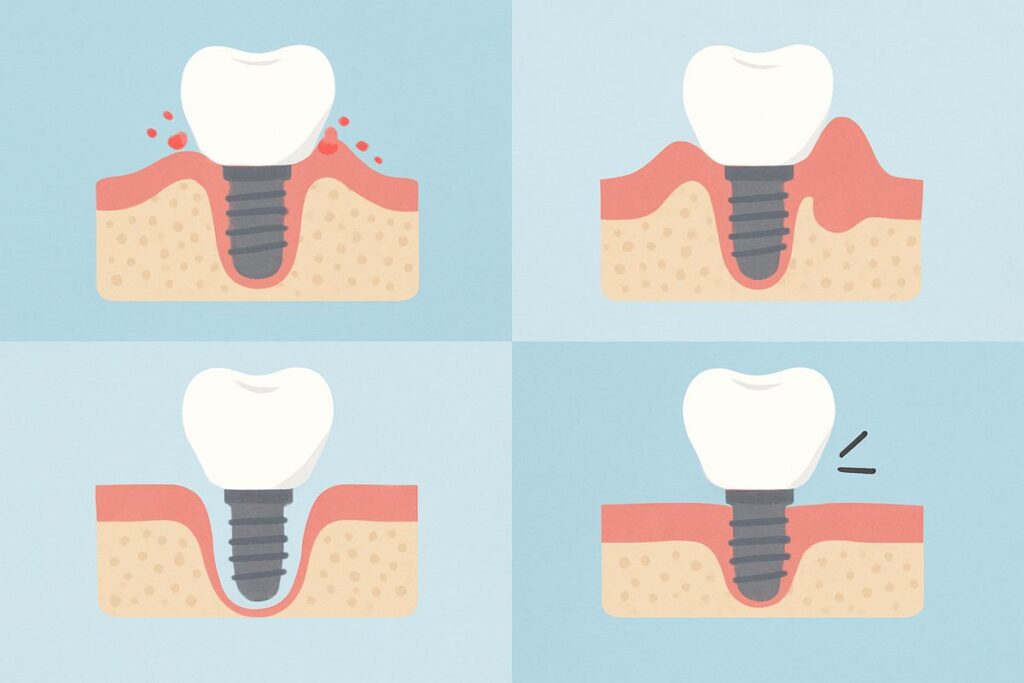
This article explains the long-term side effects of dental implants in Bradenton, what causes them, and how you can prevent or treat problems. If you’re thinking about implants or already have one, this guide will help you spot issues early and understand treatment options so your smile lasts.
What Are Dental Implants?
Dental implants are metal posts placed into the jawbone to replace missing teeth. A typical implant has three parts: the implant (the metal post in the bone), the abutment (connects the post to the crown), and the crown (the visible tooth). Implants restore chewing, speech, and appearance and are a common option for long-term tooth replacement.
Short-Term vs. Long-Term Side Effects
Short-term effects after placement can include pain, swelling, and minor bleeding. These usually go away in days to weeks. Long-term side effects of dental implants, however, may show up months to years later and can affect the gum, bone, or the implant parts themselves. Long-term issues require different care and sometimes more involved treatment.
Common Long-Term Side Effects Of Dental Implants
Peri-implantitis (gum infection around the implant)
Peri-implantitis is an infection that causes inflammation and bone loss around the implant. If ignored, the bone that holds the implant can shrink and the implant may become loose or fail. Regular check-ups help catch this early.
Gum recession and aesthetic changes
Gums can pull back over time, exposing metal or making the implant look longer than nearby teeth. Recession can cause sensitivity and affect the way your smile looks. Early treatment and good home care can limit changes.
Bone loss around the implant
Bone loss reduces support for the implant and can change your bite. It may be caused by infection, excess force, or medical conditions that weaken bone. If bone loss is detected early, bone grafting may help rebuild support.
Prosthetic problems: loosening, wear, or fracture
Crowns, screws, and abutments can loosen, wear, or break. These problems often need repairs or replacement parts. Routine maintenance and avoiding hard or sticky foods can lower the chance of breakage.
Who Is More Likely To Experience Long-Term Problems?
People at higher risk include smokers, those with uncontrolled diabetes, anyone with poor oral hygiene, past periodontal (gum) disease, people who grind their teeth (bruxism), and patients who skip regular dental care.
Symptoms To Watch For — When To Contact Your Dentist
Call your dentist if you notice persistent swelling, bleeding, pain when biting, a loose implant, bad taste or odor, or visible changes around the implant. Early action often prevents worse outcomes.
How To Reduce Risk And Protect Your Implant Long-Term
Daily brushing and flossing, regular professional cleanings, quitting smoking, managing diabetes, using a night guard for grinding, and routine implant check-ups are key. These steps lower the chance of long-term side effects of dental implants in Bradenton and help implants last decades.
If A Long-Term Issue Occurs: Treatment Options
Non-surgical care can include cleaning below the gum and antibiotics. Surgical options include debridement and bone grafting. In some cases, implant revision or removal and prosthetic repairs are needed. Recovery and outcomes vary but many issues can be treated successfully.
Long-Term Success Rates And Realistic Expectations
Dental implants have high survival rates when patients maintain good care and address risks. Regular follow-up and healthy habits greatly improve longevity and reduce the chance of serious long-term side effects.
About Dental Care Solutions — Bradenton
Dental Care Solutions in Bradenton offers family-focused implant care led by Dr. Mesia and Dr. Gonzalez. The bilingual team uses technologies like WaterLase and iTero and offers financing to make treatment accessible.
Conclusion / Next Steps
Discuss the long-term side effects of dental implants with your implant dentist and schedule an exam if you notice symptoms. Early detection and proper care are the best ways to protect your implant and your smile.