
If you’re wondering how implant works and whether it’s right for you, this guide explains the basics in plain language. You’ll learn what a dental implant is, the main steps from planning to the final crown, who makes a good candidate, common benefits and risks, and simple home care tips. If you’re curious about how implant works in Bradenton, FL, this will help you prepare questions for your consultation.
What Is a Dental Implant?
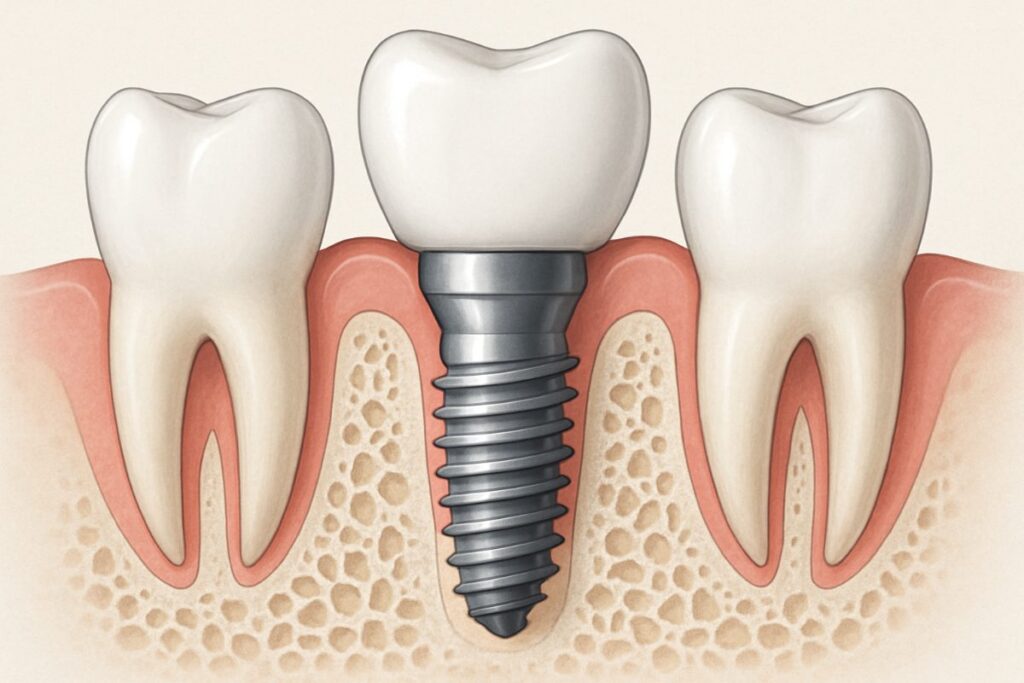
A dental implant replaces a missing tooth with three parts: the titanium implant (the root), the abutment (the connector), and the crown (the visible tooth). The implant is usually made of medical-grade titanium because bone bonds well to it. Crowns are made from porcelain or ceramic for a natural look. With good care, implants can last many years — often decades.
How Implant Works — Step-by-Step
Consultation & planning
Your dentist will take X-rays or a 3D scan and do an oral exam to plan implant size and placement. This visit determines if you need bone grafts, extractions, or other preparatory work. Clear planning improves outcomes and lowers risk.
Implant placement surgery
During a minor surgical visit, the titanium implant is placed into the jawbone. The area is closed with stitches or a healing cap. Many procedures use local anesthesia and, if desired, sedation for comfort. Recovery from this step usually takes a few days of mild swelling or soreness.
Osseointegration: bone healing
Over weeks to months, your jawbone fuses to the implant in a process called osseointegration. This creates a strong foundation similar to a natural tooth root. Successful osseointegration is why implants feel stable and restore chewing strength.
Abutment and final restoration
Once healed, the abutment is attached and a custom crown is made to match your teeth. Digital impressions often speed up this step and improve fit. The final crown is cemented or screwed on and functions like a normal tooth.
Who Is a Good Candidate?
Good candidates are in generally good health, have healthy gums, and enough jawbone to support an implant. Smoking, uncontrolled diabetes, or active gum disease can affect success. When implants aren’t right, alternatives include bridges or partial dentures. Your dentist can recommend the best option.
Benefits and Risks
Benefits include a natural appearance, restored chewing power, and prevention of bone loss where teeth are missing. Risks are low with good planning but can include infection, implant failure, or need for further grafting. Careful evaluation and modern techniques reduce these risks.
Recovery and Home Care
Initial healing is usually a few days; full osseointegration can take 3–6 months. Use soft foods, ice for swelling, and prescribed pain meds as directed. Long-term care includes brushing, flossing, and routine dental visits to check the implant and surrounding gum tissue.
Why Choose Dental Care Solutions for Implants
Dental Care Solutions in Bradenton, Florida, offers family-focused implant care led by Dr. Juan Mesia and Dr. Lia Patricia Gonzalez. The bilingual team uses advanced tech like WaterLase® and the iTero scanner for comfortable, precise treatment. Financing options are available to make implants more accessible.
Next Steps: Ready to Learn More?
If you want to understand how implant works in Bradenton, FL for your case, schedule a consultation to review imaging, costs, and financing. A visit will let the team explain your options and create a clear treatment plan tailored to your smile.